Synthetic / surrogate validation artifact
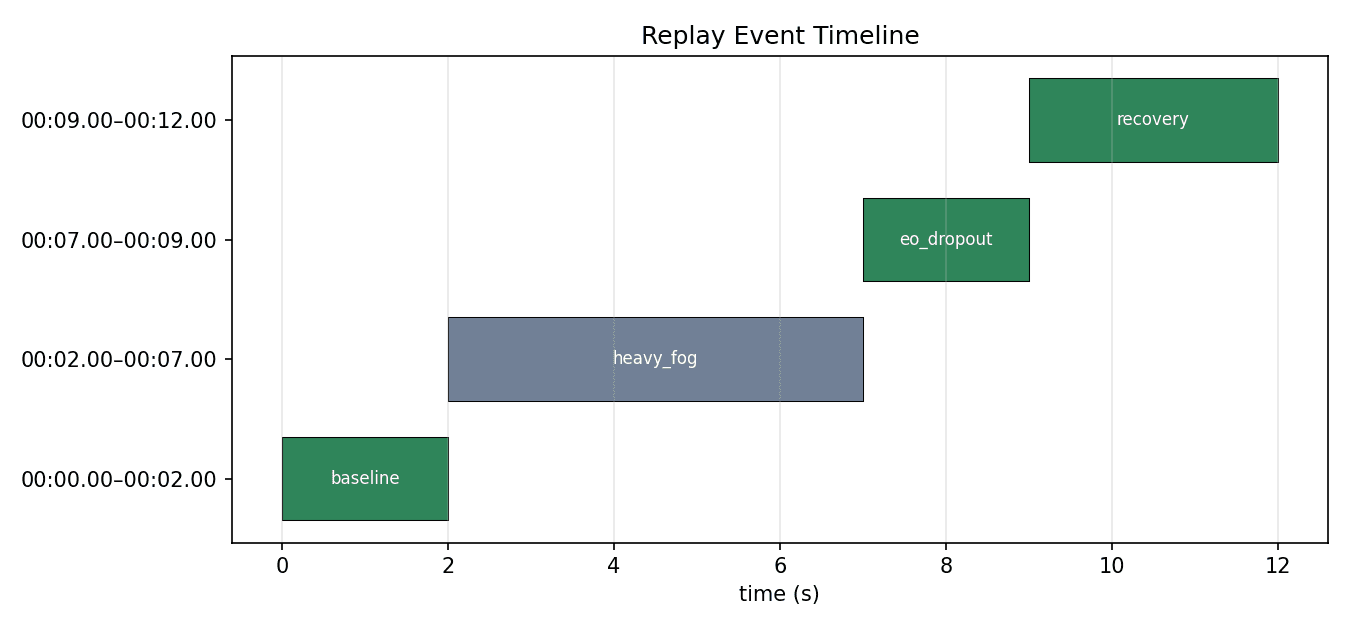
Replay event timeline
Summarizes declared replay event windows so reviewers can scan agreement, warning, and disagreement intervals quickly.
VALIDATION INFRASTRUCTURE / MARITIME EO/IR PERCEPTION
Synthetic · surrogate · replay · validation
Synthetic scenarios, surrogate captures, deterministic replay, and measurement-quality review for maritime autonomy and sensor-fusion teams.
For technical teams: generic seeker-like measurement schemas, GNC/test export paths, and fusion-policy comparison — non-operational validation infrastructure only.
Replay Console
Synthetic session A-17
Confidence
0.82
Dropout
4.1%
Disagreement
1.7 deg
Demo
The flagship demo is a 120-second synthetic maritime observation scenario showing EO/IR degradation, dropout, channel disagreement, fusion-policy behavior, severity-scored replay review, and report generation.
The same validation stack now accepts benign surrogate capture: real EO shoreline video → reviewed annotations → bearing/elevation measurements → replay review artifacts.
Primary artifact
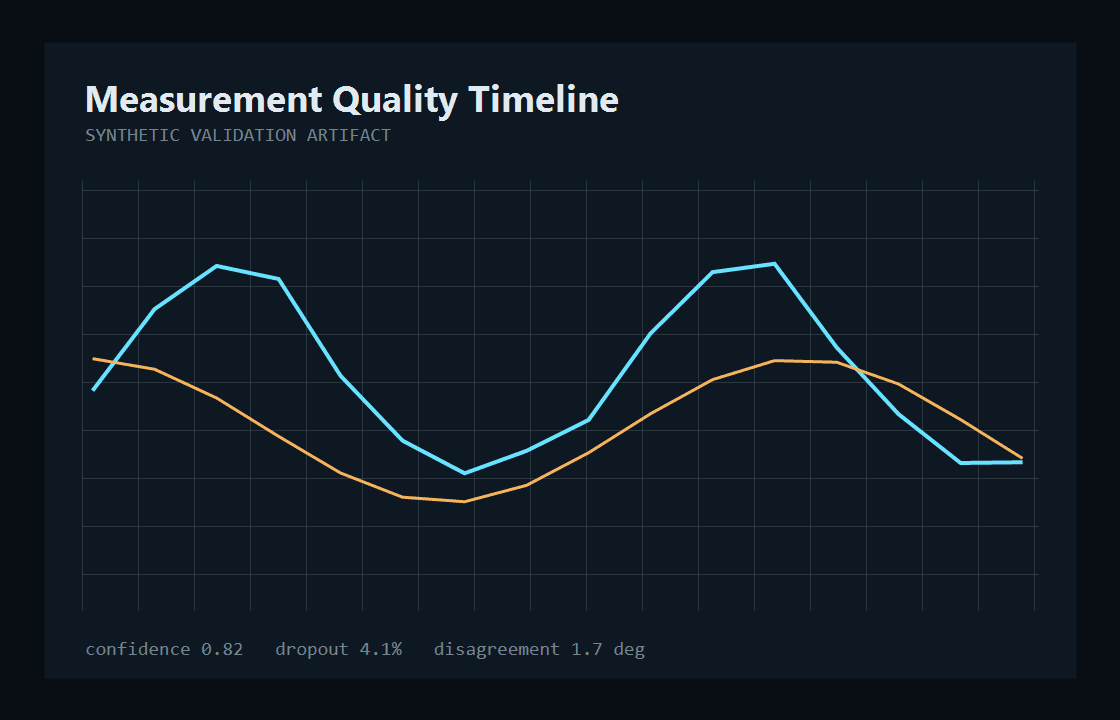
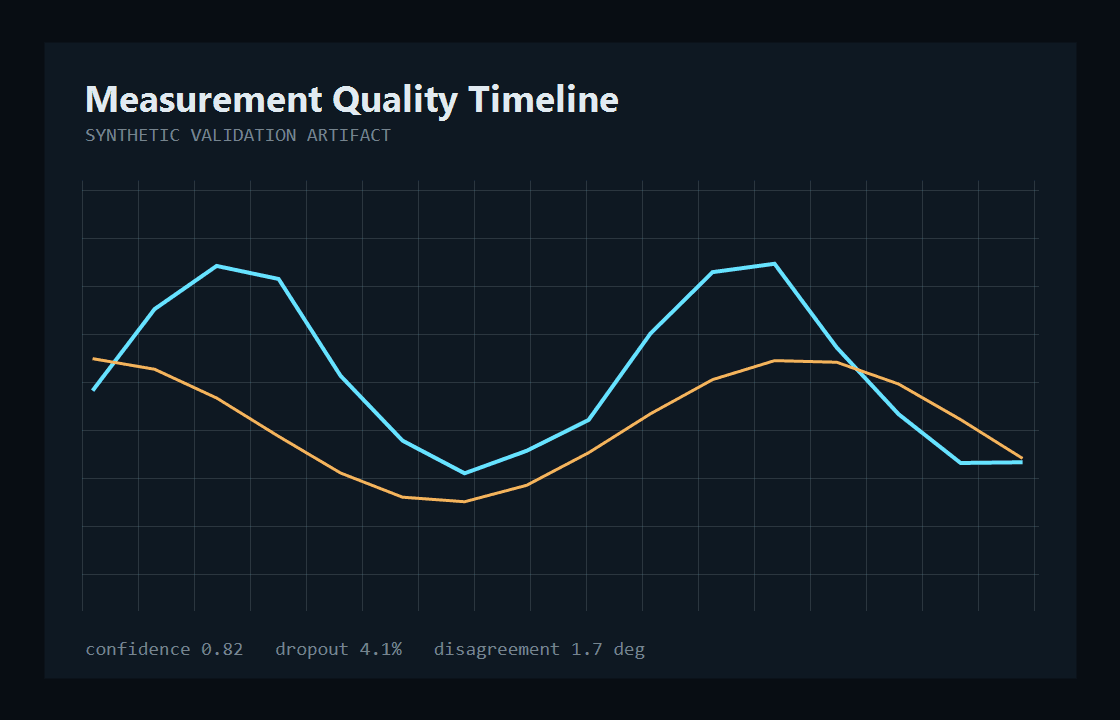
Shows how confidence, validity, and measurement gaps evolve over the 120-second synthetic observation scenario.
Channel comparison
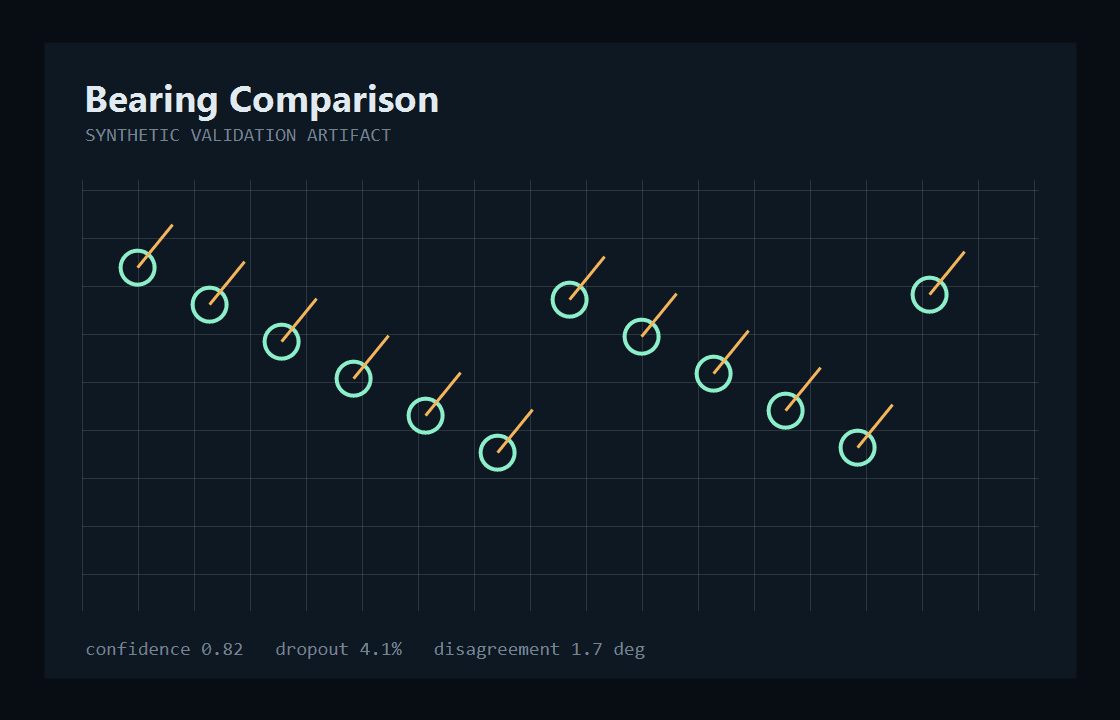
Compares EO/IIR channel estimates with fused measurements to surface channel disagreement and dropout periods.
Environment sweep
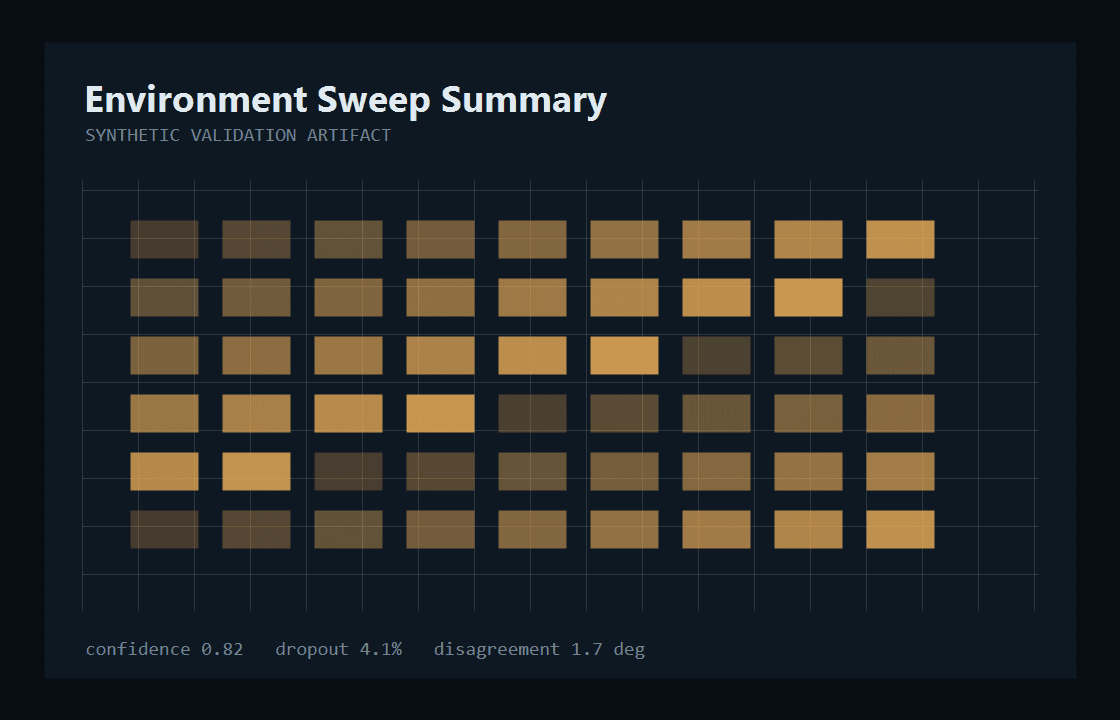
Summarizes repeatable maritime-like environment effects across visibility, clutter, and observation conditions.
Policy analysis
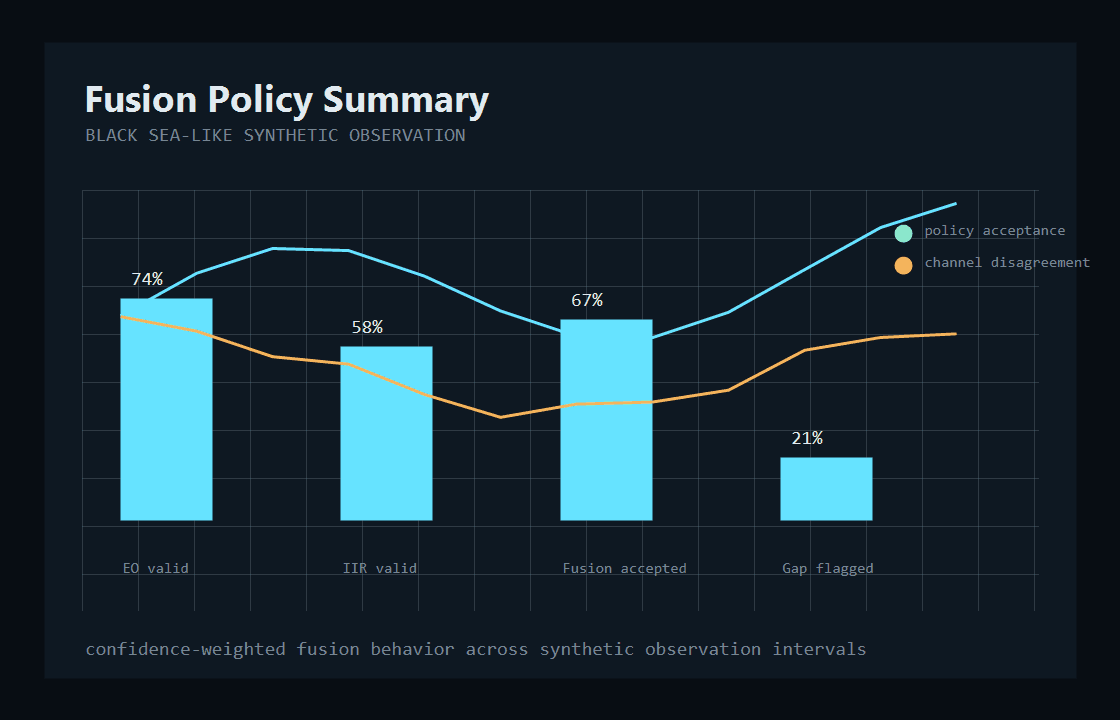
Highlights how fusion-policy behavior changes as channel confidence, validity, and disagreement shift.
Session evidence
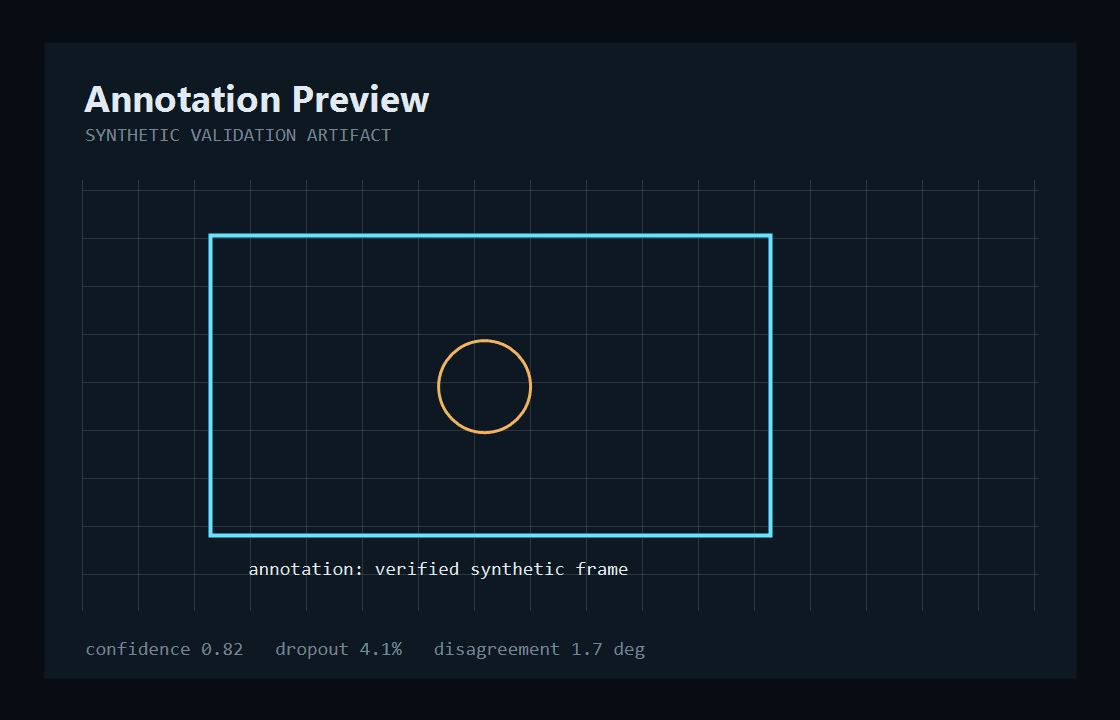
Shows synchronized synthetic annotations that connect frame-level evidence to telemetry replay and reports.
Different maritime-like observation conditions degrade EO and IIR channels differently. The platform quantifies how confidence, validity, fusion acceptance, and measurement gaps change across synthetic environments.
Recent milestones
Implemented milestones
EO-only surrogate capture workflow: real shoreline video through annotations, measurements, and replay review
Capture session manager CLI for field-to-report surrogate workflows
Validation showcase with replay review, EO/IR availability, disagreement bursts, and scenario diff artifacts
Severity-based replay review with deterministic session bookmarks
Degraded maritime visibility scenario pack implemented
C++ observation-geometry foundation for future 3D validation workflows
Validation of degraded maritime EO/IIR observation conditions including fog, glare, clutter, dropout, and channel disagreement.
Focus areas
Current stack
Python
QA, reporting, synthetic workflows, artifact generation
C++
geometry, observation modeling, future replay/runtime primitives
Next.js
website and report presentation
Validation showcase
Degraded maritime EO/IIR observation scenarios are replayed as multichannel validation sessions, summarized with event timelines, channel availability, disagreement bursts, and scenario-to-scenario diff artifacts.
Synthetic / surrogate validation artifact
Summarizes declared replay event windows so reviewers can scan agreement, warning, and disagreement intervals quickly.
Synthetic / surrogate validation artifact
Shows EO/IIR availability transitions across the replay session without opening raw telemetry files.
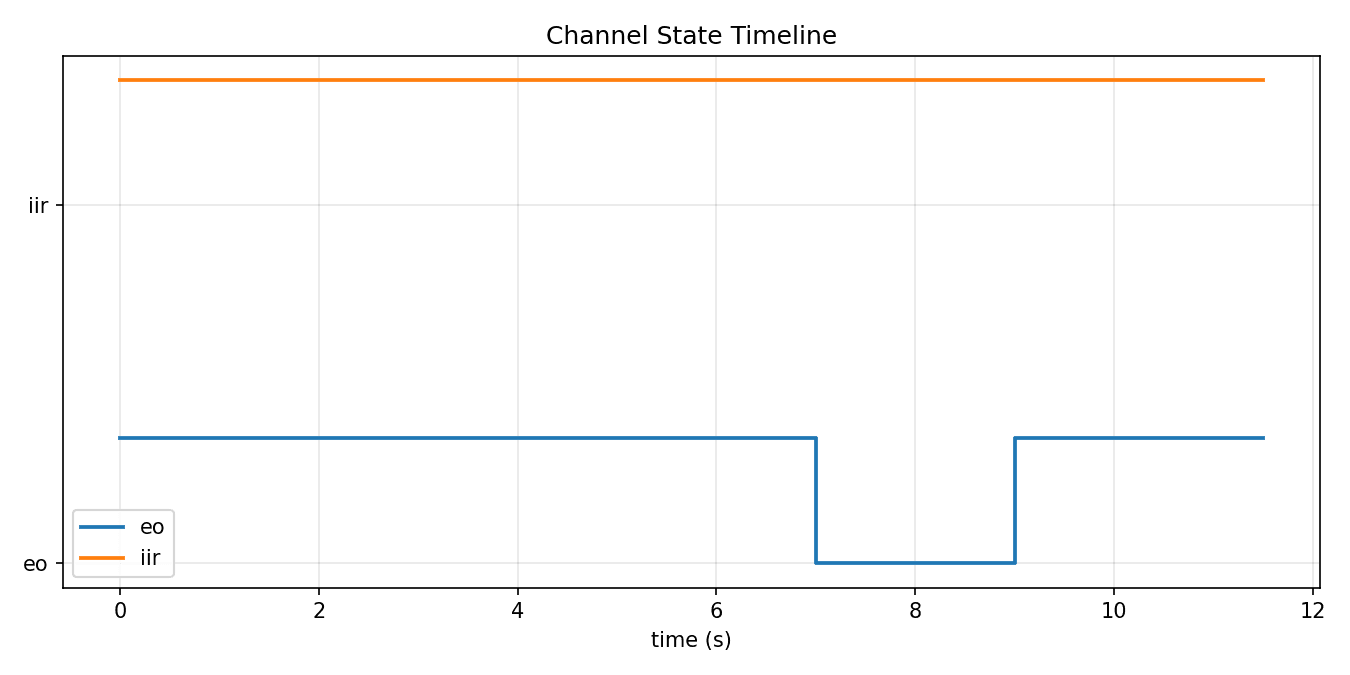
Synthetic / surrogate validation artifact
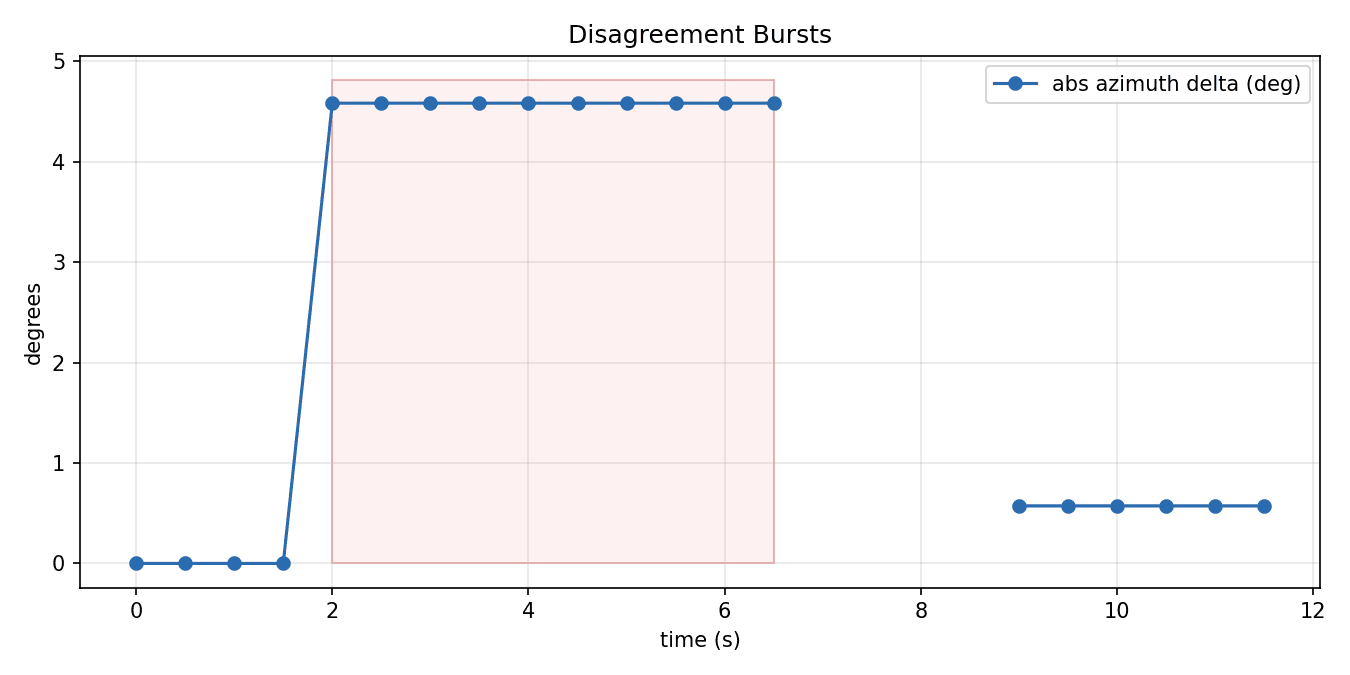
Highlights contiguous warning and disagreement intervals where channel offsets exceed validation thresholds.
Synthetic / surrogate validation artifact
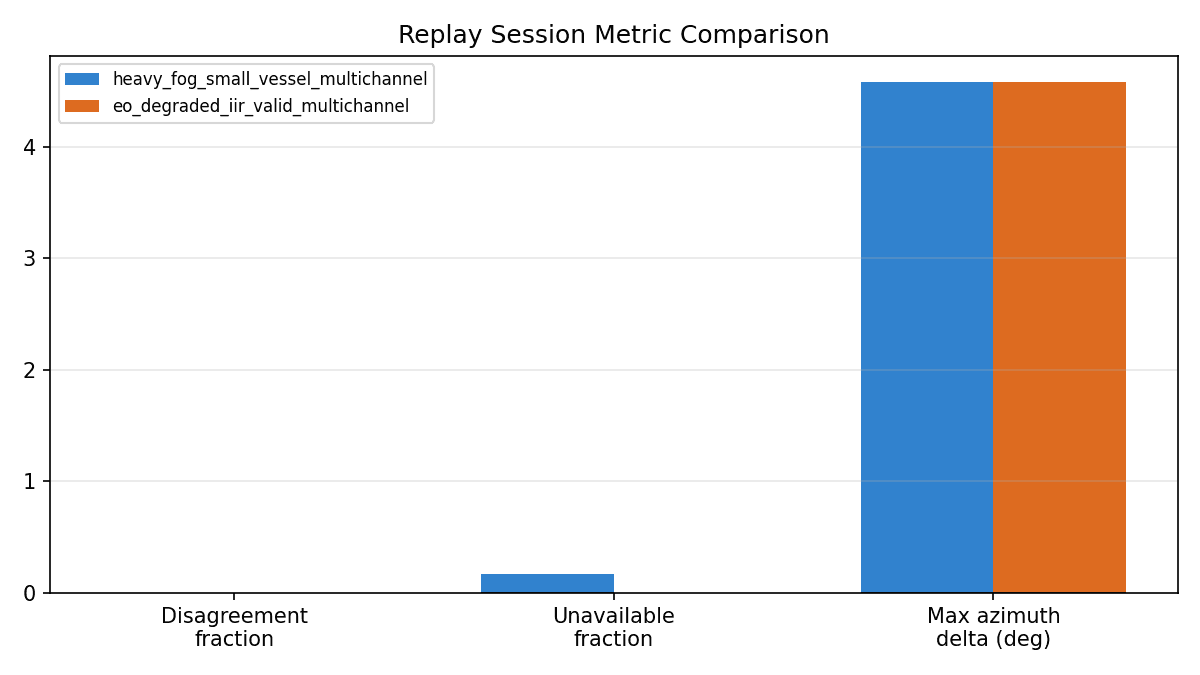
Compares disagreement, unavailable fraction, and azimuth-delta metrics between two degraded-visibility replay sessions.
Replay review
The validation layer does not only generate plots. It scores replay severity, identifies the most important review moments, and creates deterministic bookmarks so engineers can jump directly to the parts of a session that need attention.
Recommended review focus
Top bookmarks
bm_0001
7.00–9.00 sEO unavailable for 2.0 s during replay review.
bm_0002
0.00–2.00 sWarning interval persisted for 2.0 s with potential measurement-gap risk.
bm_0003
2.00–6.50 sAgreement warning persisted for 4.5 s during offset drift.
Severity preview
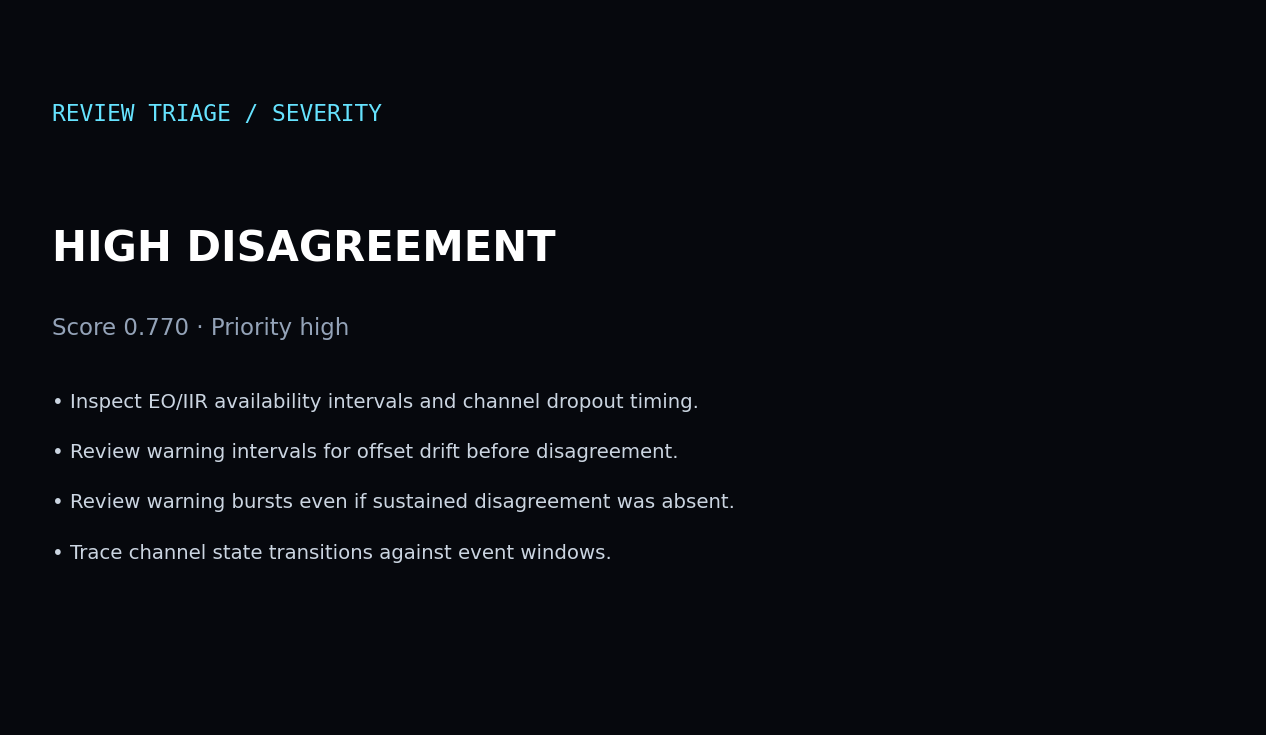
Static preview of session severity label, score, and recommended review focus.
Session bookmarks
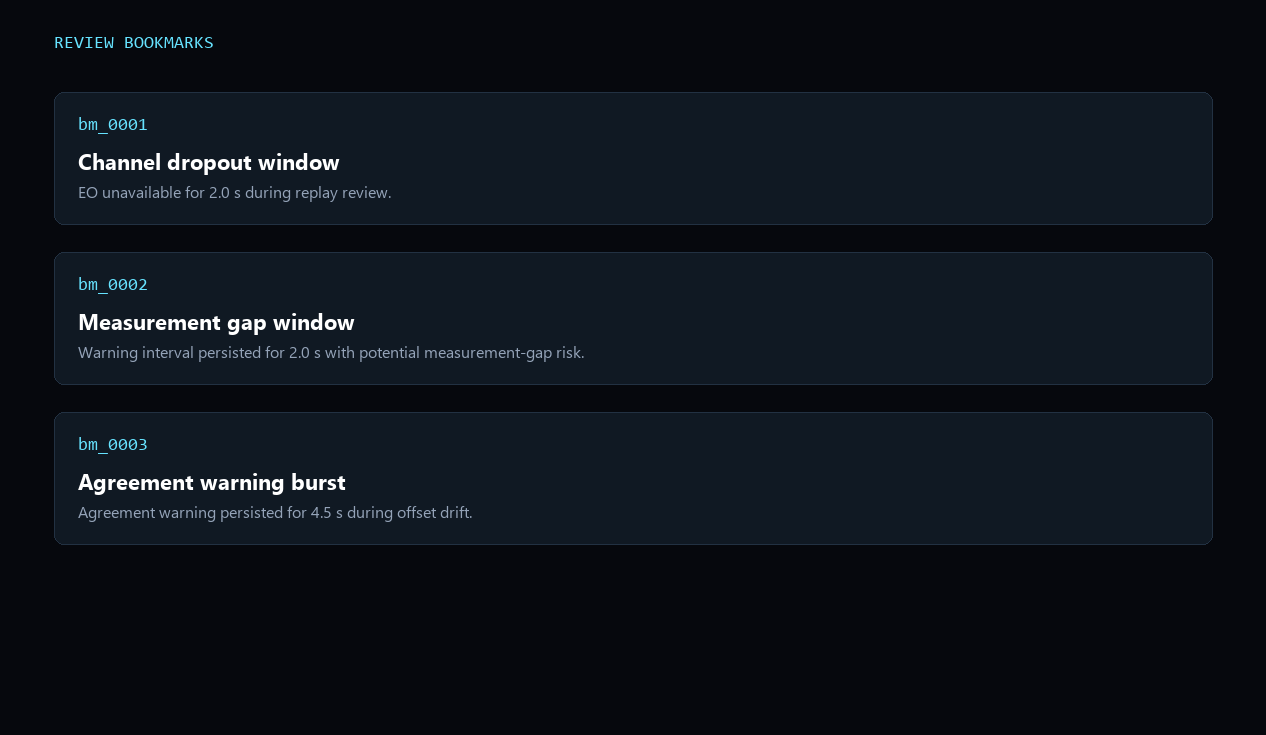
Top deterministic bookmarks exported from the validation showcase replay review.
Review cards
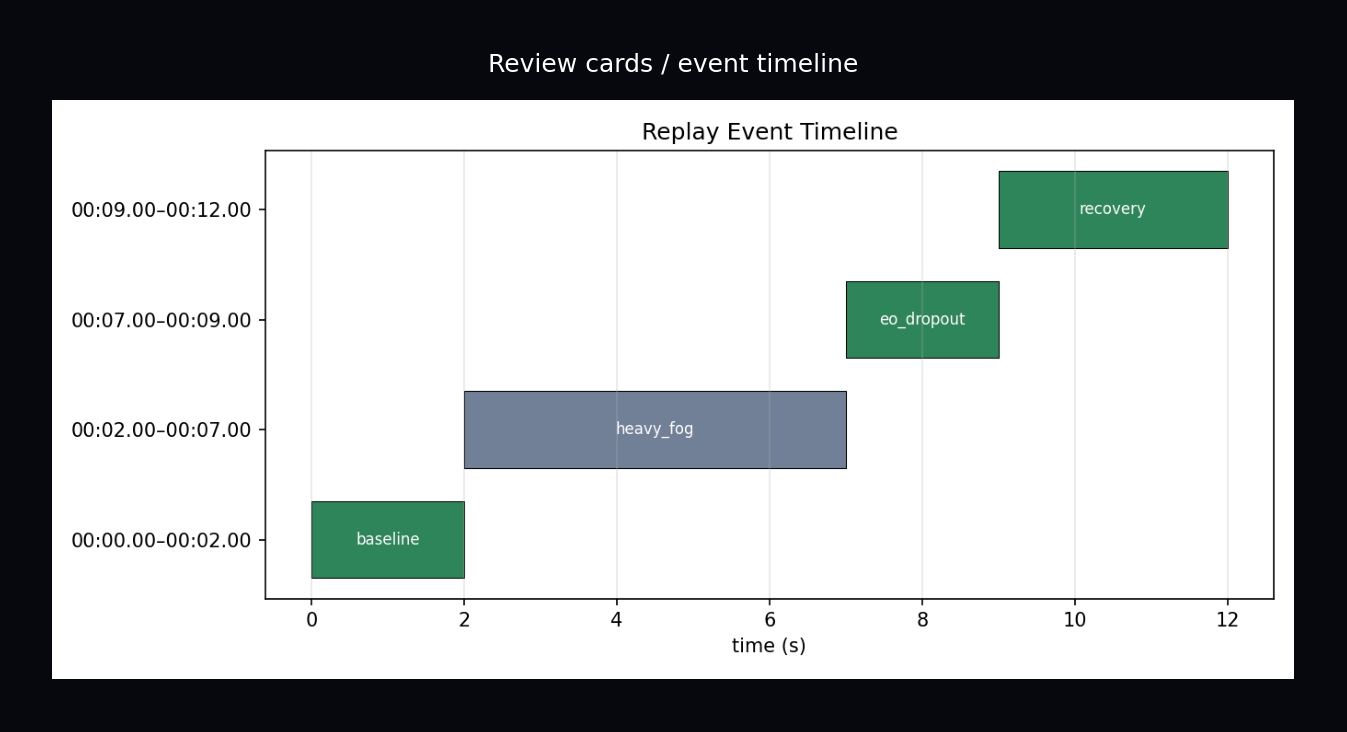
Preview of replay event windows and review-card context from the exported showcase.
Showcase report
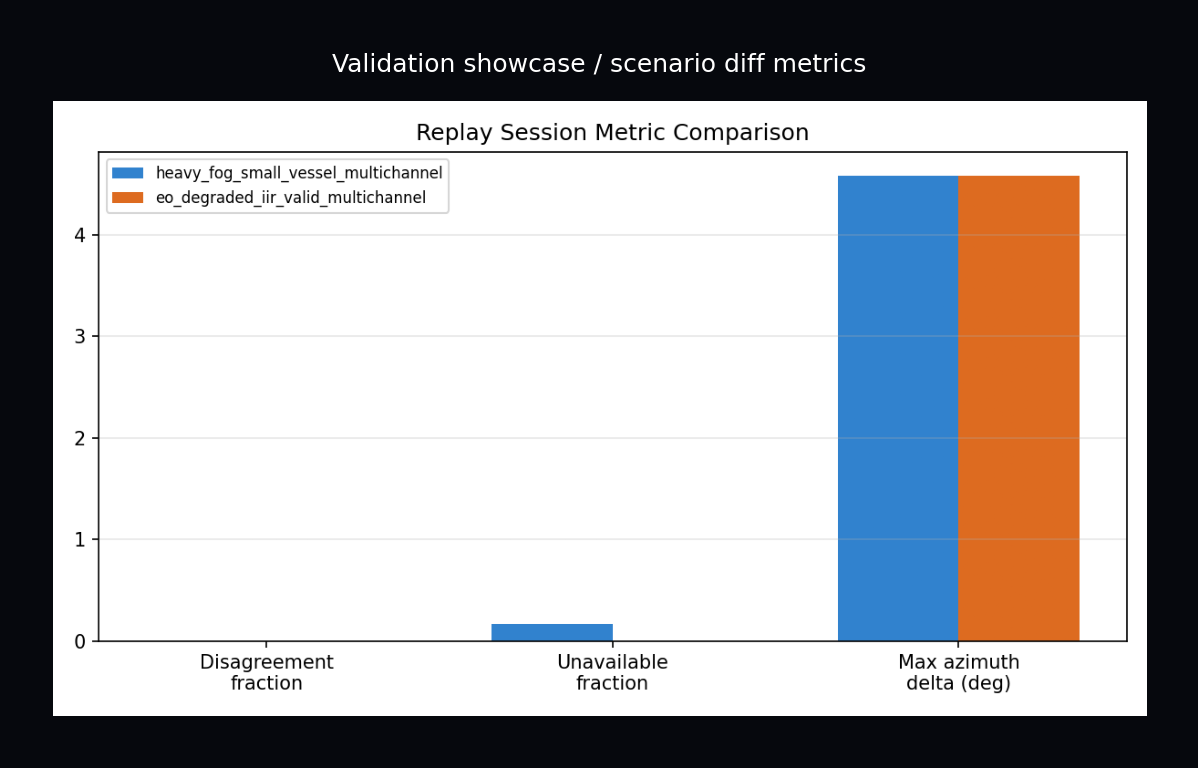
Preview of scenario diff metrics from the validation showcase export.
Problem
EO/IIR maritime perception degrades under visibility shifts, sea clutter, intermittent dropout, channel disagreement, and confidence uncertainty. Validation work needs controlled variation, traceable measurements, and reviewable artifacts that technical and business stakeholders can read.
Visibility loss
Sea clutter
Channel dropout
Confidence uncertainty
Platform
Package benign real-world EO/IR capture sessions, validate manifests, convert reviewed annotations into bearing/elevation measurements, and produce replay review artifacts.
Compare EO/IR measurements against controlled references, uncertainty bands, and event annotations in synthetic and surrogate workflows.
Evaluate confidence-weighted fusion policies under dropout, disagreement, clutter, and visibility shifts.
Run repeatable scenario grids across sea state, haze, glint, range, and observation geometry.
Use telemetry replay with synchronized plots, frame previews, annotations, and executive summaries.
Validate structured surrogate EO/IR packages, convert manual annotations into bearing/elevation measurements, and produce demo reports.
Replay generic bearing, confidence, validity, and channel-disagreement schemas suitable for V&V — not operational targeting software.
Emit MATLAB-friendly tables and replay artifacts that fit guidance, navigation, and test analysis workflows.
Move from manifest to annotations, measurements, fusion, comparison, replay, and report packages.
Pipeline
01
Session Manifest
02
Annotations
03
Measurements
04
EO/IIR Fusion
05
Policy Comparison
06
Replay
07
Reports
Use cases
Maritime autonomy and EO/IR perception teams
GNC and test analysis teams
Sensor fusion and payload R&D
Defense-tech prototyping and V&V teams
Roadmap
01
Synthetic showcase and validation artifacts
02
Surrogate EO/IR capture through measurement and replay review
03
Maritime environment sweeps and degraded-visibility packs
04
Capture session manager and field-to-report workflows
05
Generic 3D/6DOF validation core
ONE-PAGER
The one-pager summarizes validation infrastructure for maritime EO/IR perception — synthetic and surrogate workflows, demo artifacts, seeker-like measurement replay, GNC/test export, roadmap, and scope boundaries for technical diligence and partner conversations.
Maritime autonomy and sensor-fusion teams lack repeatable validation infrastructure for EO/IR measurement quality. Experiments often live in ad hoc scripts and one-off plots — and partners ask whether the workflow handles real sensor capture too.
The platform provides validation infrastructure for maritime EO/IR perception: synthetic scenarios for controlled V&V, surrogate captures for real sensor texture, deterministic replay, fusion-policy analysis, seeker-like measurement schemas, GNC/test export, and visual reporting.
Non-operational validation infrastructure only. No weapon design, targeting, launch/deployment behavior, terminal attack logic, or operational engagement software.
Share the brief with technical partners, investors, and review teams that need a compact overview of the validation workflow.
Founder
Founder profile
Founder, Euxine Labs
Computer Vision / Real-Time Systems / Maritime Autonomy
Location: Türkiye
Current focus
Validation infrastructure from synthetic V&V to surrogate capture
Computer vision and real-time systems engineer with experience in maritime autonomy, EO sensing, sensor fusion, embedded perception systems, and telemetry-heavy workflows. Previously worked on autonomous maritime perception and sports-tracking systems combining computer vision and radar telemetry.
Validation infrastructure for maritime EO/IR perception
Seeker-like measurement replay and fusion analysis
GNC/test export and telemetry replay
Synthetic and surrogate engineering review workflows
Scope
Benign, non-operational validation infrastructure only. The platform supports synthetic and surrogate EO/IR measurement replay, fusion-policy analysis, seeker-like schema validation, GNC/test export, and engineering review — not launch/deployment behavior, operational targeting, or fielded weapon software.
Contact